


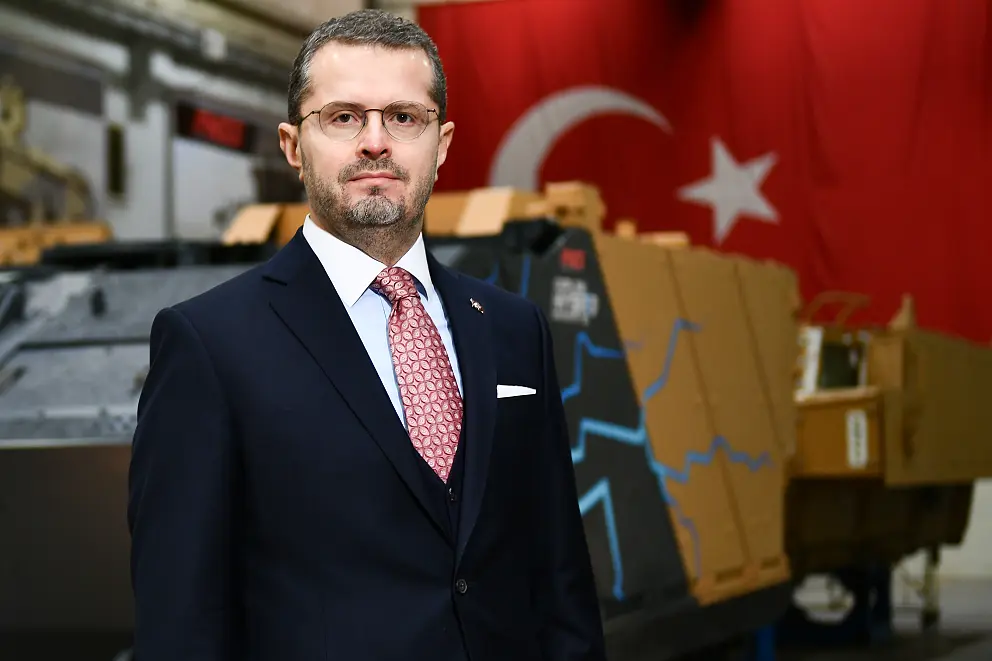
A Message from Our General Manager Selim BAYBAŞ
The rapid deterioration of the security environment globally and in our region compels us to prioritise indigenous and national solutions for homeland defence. While we focus on developing sustainable, high‑performance capabilities, we continue to strengthen technology cooperation with allied nations to meet their requirements on time and to the highest standards. By increasing domestic production capacity and pursuing joint‑development programmes and strategic supply‑chain partnerships, we aim both to permanently enhance our country’s defence capabilities and to satisfy the needs of allied forces through strategic cooperation with international defence companies.
As we close the first quarter of 2026, I am proud to share the tangible progress the FNSS family has achieved on the field, in production and on international platforms.
First, we have completed deliveries of several PARS SCOUT 8×8 CBRN Reconnaissance Vehicles to the Turkish Land Forces. The delivery of these CBRN reconnaissance vehicles to Land Forces will directly strengthen our nation’s deterrence and protection capabilities in critical missions. We also expect the PARS SCOUT 6×6 and 8×8 platforms produced under the Special Purpose Vehicles Project to increase in number over time, providing a new force multiplier for infantry and reconnaissance units.
At the World Defense Show in Riyadh, Saudi Arabia, we exhibited the PARS ALPHA 8×8 New‑Generation Armoured Fighting Vehicle and our KAPLAN MT vehicles, drawing significant interest from allied delegations and enabling meetings with numerous strategic stakeholders. At WDS, together with Nurol Makina, we signed a cooperation protocol with Miilux OY that secures a dependable domestic source of armour steel for our programmes, strengthening the integration of our supply chain with the national economy.
Our Marine Assault Vehicle (ZAHA) again made an impact at an international exercise. During STEADFAST DART 26, conducted with participation from Türkiye and allied nations, ZAHA elements demonstrated a solid force‑multiplier effect for our marine infantry battalion and successfully showcased interoperability in multinational operations in the Baltic Sea. Such deployments not only validate our products’ field performance and integration with allied operations, but also open new horizons for us.
I am also pleased to report that the final assembly of the first KAPLAN Armoured Personnel Carrier Vehicle is nearing completion. With production complete, testing planned for first half of 2026 and serial production in Indonesia will enhance the KAPLAN APC’s competitiveness and multi‑mission performance in global markets.
Our efforts on new partnerships and technological advancements continues at full speed. We are strengthening R&D capacity through national and international strategic collaborations and accelerating projects that enhance localisation and supply‑chain resilience. We are integrating survivability, situational‑awareness and AI‑based solutions through joint‑development programmes with SMEs and technology partners, while field trials and user feedback continue to mature our products. This approach aims both to upgrade current platforms and to bring new‑generation capabilities into service more rapidly.
With the trust and cooperation of our valued stakeholders, we are committed to building a stronger, more agile and more competitive FNSS. We will keep sharing the developments of our transformation journey with you. Thank you for your continued support.
Respectfully,
Selim Baybaş
CEO & Board Member
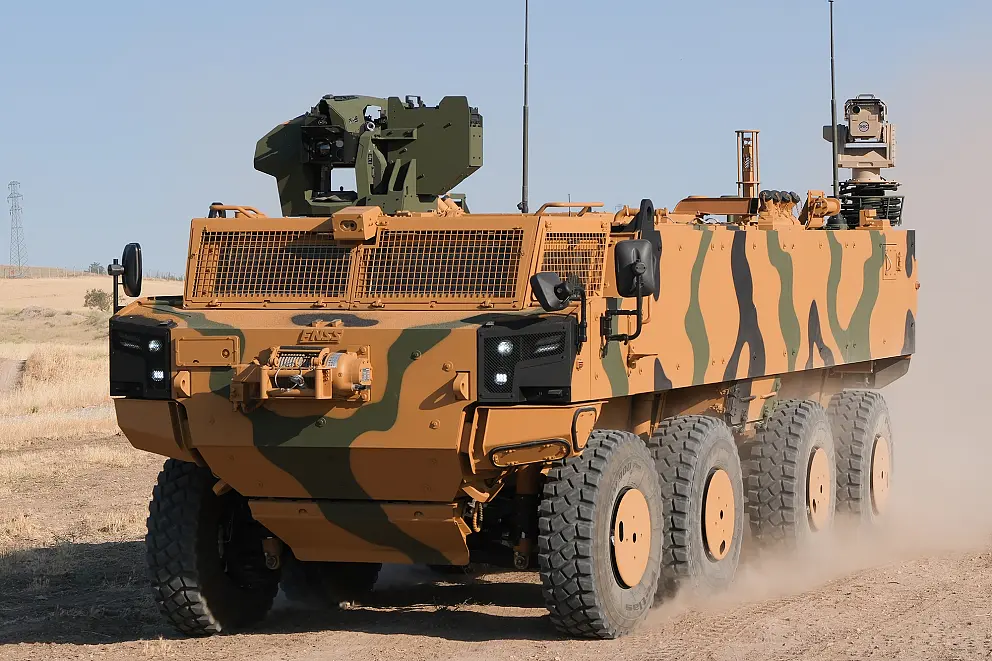
PARS SCOUT 8×8 CBRN Reconnaissance Vehicles Enter the Turkish Land Forces Inventory for the First Time
The Turkish Land Forces have completed inspection and acceptance activities and taken delivery of a number of PARS SCOUT 8×8 Chemical, Biological, Radiological and Nuclear (CBRN) Reconnaissance Vehicles. With these deliveries, CBRN reconnaissance vehicles have entered the Turkish Land Forces inventory for the first time.

FNSS Test, Simulation, Analysis and
Laboratory Services
FNSS’ nearly 40 years of experience in test, analysis, simulation and laboratory capabilities is validated by accreditation certificates awarded to our Test and Calibration Laboratories by TURKAK. Under FNSS Test Services we provide integrated, customer‑tailored testing across vibration and noise, ballistics and blast, automotive and field trials, dynamometer testing, component testing and EMI‑EMC. In addition, we offer simulation and analysis services and operate accredited ballistics, calibration, materials & chemistry and environmental test laboratories serving defence, automotive and other industrial customers.
The Amphibious Force Multiplier MAV (ZAHA) in Exercise STEADFAST DART 26
During the STEADFAST DART 26 NATO exercise, conducted with the participation of Türkiye and allied NATO nations, FNSS MAV (Marine Assault Vehicle) contributed to allied operations in the Baltic Sea alongside NATO and Turkish-based maritime task force.
Following a ten-day deployment, the task group arrived at the Port of Kiel, joining the TCG Anadolu, TCG Oruçreis, TCG İstanbul, and the replenishment ship TCG Derya.
Heavy equipment and personnel moved by air, sea, and rail transport, as well as large-scale road convoys. The result: a logistical achievement that underscores NATO's multinational operational capability as well as the efficiency of Germany as a hub providing "Host Nation Support." Throughout the exercise, scenarios involving deployment and integrated air-sea-land operations were successfully executed. Turkish Navy Marine Infantry Battalion, conducting beach landing operations with FNSS MAVs, demonstrated a high level of interoperability with the marine units of allied NATO countries, in strict accordance with tactical scenarios.
The participation of MAV highlights the effective cooperation between the industry and the Turkish Armed Forces with NATO allies, showcasing their vital contribution to multinational maritime operations.
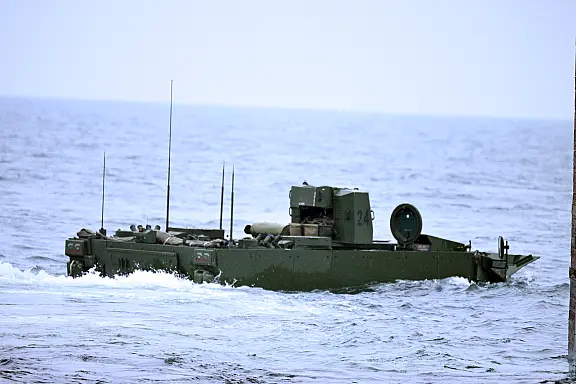
Photo Credit: Anadolu Ajansı
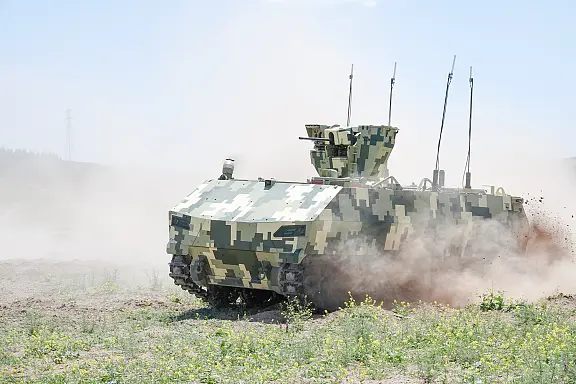
Autonomy in Defence Systems: A Future Vision
Serkan Balbay - Vetronics & Weapon Systems Director
1. Strategic Paradigm Shift
The integration of autonomous systems represents not only a technological upgrade but a fundamental turning point in modern warfare. These systems accelerate operational tempo, force the adoption of new doctrine and tactics, and redefine traditional combat function. In the modern conflict, technological superiority is mission-critical; states that fail to adapt to this robotic revolution will face a severe and irrecoverable strategic disadvantage.
2. Lessons from Recent Conflicts (The Ukraine Example)
Modern conflicts such as those in Ukraine serve as operational proving grounds for robotic warfare. Key lessons include:
- Condensed Timelines: Inexpensive, rapidly iterated drones have shortened the find‑fix‑finish cycle to a matter of minutes.
- Electronic Warfare (EW): Agressive jamming and spoofing require constant evolution in sensor autonomy and resilient communication links.
- Multi‑Domain Utility: While Unmanned Surface Vehicles (USVs) enable low‑cost precision operations at sea, Unmanned Ground Vehicles (UGVs) have become mandatory for logistics, breaching operations and casualty evacuation (CASEVAC) under heavy fire.
- Software‑Defined Warfare: The battlefield is shifting towards an “algorithm‑centric” warfare where mass production, learning speed and EW resilience are more critical than the prestige of the platform itself.
3. The Technological Frontier: Perception and Navigation
Achieving full autonomy in off-road environments requires overcoming significant engineering challenges:
- Complex Navigation: Advanced global and local path‑planning systems are essential for safe manoeuvre of UGVs, UAVs, USVs through unpredictable terrain.
- Sensor Fusion: Systems must integrate diverse data from LIDAR, stereo imagers, millimeter-wave radar, and GNSS to create a reliable operational picture.
- On-Board Computing: Future defense systems require massive in-vehicle computing power—exceeding 10-30 Gbit/s throughput—to process real-time data and run thousands of internal simulations per second.
- Mass Production: For autonomous systems to be effective at scale, production must be mass-affordable and utilize software-defined architectures that can be quickly adjusted based on real-time operational data.
4. Redefining the OODA (Observe–Orient–Decide–Act) Loop: AI as the Decision Factor
The traditional OODA loop is being transformed by Artificial Intelligence (AI):
- Beyond Human Speed: Against autonomous systems capable of millisecond reaction times, human-centric decision-making will increasingly be outmatched.
- Computational Complexity: Modern operational environments are too complex for human calculations alone; AI is required to optimize tactical maneuvers across multi-domain operations.
- Operational AI: Future commanders will use "Hi-Tech Aids" that present options and predict second-order effects, merging the planning phase of a mission with its active management.
5. The Future Battlefield: A New Reality
Looking ahead, the nature of conflict will be defined by several emerging trends:
- Autonomous Dominance: Swarming—the use of coordinated robotic systems—will become a dominant tactical approach.
- Operational Irrationality: As AI matures, the deployment of human soldiers in high-intensity zones may eventually be seen as "operationally irrational" compared to the efficiency of robotic systems.
- Strategic Readiness: Staying competitive will require a focus on Emerging and Disruptive Technologies (EDTs), the use of operational simulations/wargaming to forecast needs, and a heavy emphasis on technical education within the armed forces.
6. Global Competition and Security
The race for autonomy is a global one, with the U.S. and China currently leading in AI and quantum research. Nations with the best research workforces will gain a significant advantage in economic resilience and national security. Organizations like NATO are already establishing policy guidance and tracking science and technology trends for 2025–2045 to prepare for this autonomous future.
In conclusion, future defence strategy will not be decided solely by the best platform on the field; victory will go to the side that learns fastest, fuses data most effectively and deploys the most resilient algorithms — a contest for “Algorithmic Superiority.
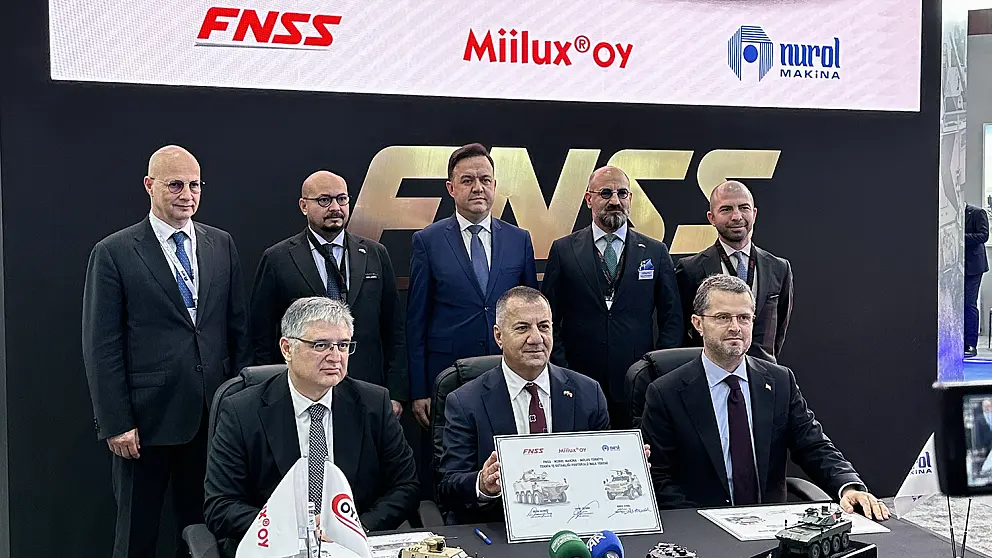
Miilux OY, FNSS and Nurol Makina Join Forces for Türkiye’s Defence Industry
Leading Turkish defence industry companies Miilux OY, FNSS and Nurol Makina have come together to sign a technical cooperation protocol. All armour steel required for FNSS and Nurol Makina projects will be supplied by Miilux OY Turkey, the country’s sole domestic producer of armour steel. The “Miilux OY – FNSS – Nurol Makina Technical Partnership Protocol” was signed at the FNSS stand during the World Defense Show. The three companies will collaborate on a range of defence projects developed both domestically and abroad.
Miilux OY, which joined OYAK’s group of companies to eliminate Türkiye’s dependence on foreign armour steel and to support localisation goals, has partnered with FNSS Savunma Sistemleri A.Ş. and Nurol Makina to strenghten the national defence industrial base.
Under the protocol, all the armour steel required for FNSS and Nurol Makina production will be sourced from Miilux OY. Considering current domestic and international programmes, new investments will be made in Miilux OY’s production lines to ensure the capacity needed to meet demand.
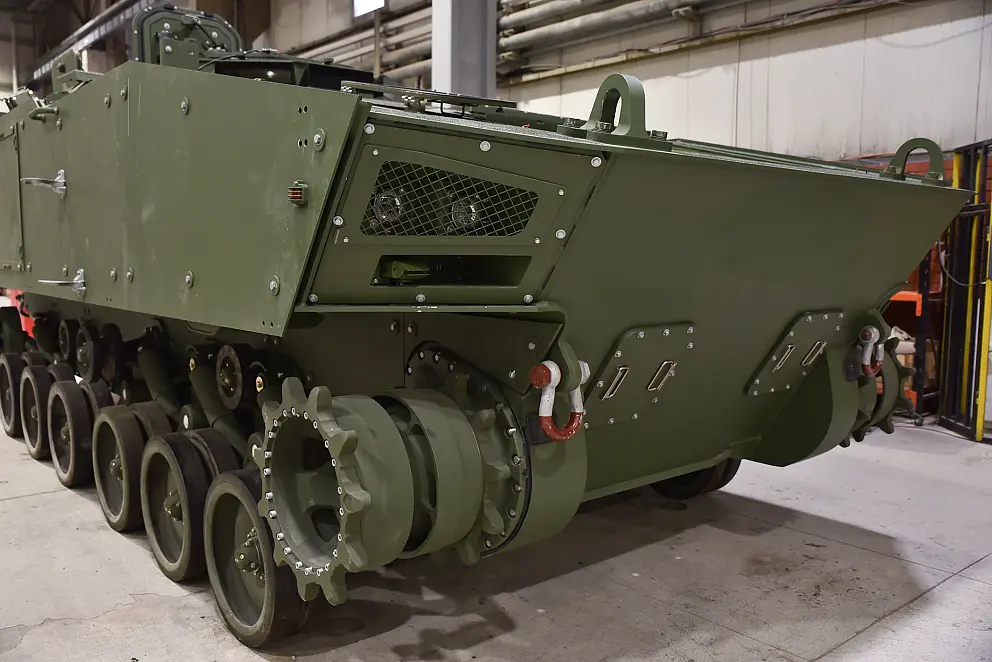
Final Stage Reached in the FNSS KAPLAN APC First Vehicle Production
First vehicle production under the FNSS KAPLAN Armoured Personnel Carrier (APC) Program has reached its final stage, with assembly nearly complete.
Following the completion of the manufacturing process, vehicle tests are planned to start in the first half of 2026. Within the scope of the project, the second vehicle will be produced in Indonesia, and the deliveries are targeted to be completed by the end of 2026.
As part of the contract signed between PT Pindad and the Indonesian Ministry of Defense to meet the Indonesian army's requirement for a 30-ton class tracked personnel carrier, PT Pindad and FNSS have signed a “KAPLAN Armoured Personnel Carrier (KAPLAN APC) Development and Production Agreement.” in February 2024.
The KAPLAN APC will be the new member of FNSS KAPLAN tracked armored vehicle family; an armoured personnel carrier, designed by FNSS to meet the requirements of future battlefields. Its design architecture will feature advanced ballistic protection, best-in-class mine protection systems, and formidable firepower, ensuring superior survivability in combat scenarios.
The structural design will enable vehicle to accommodate a crew of 13 personnel, including driver, commander, and a gunner. The vehicle will be developed to operate under all terrain and weather conditions. The vehicle will feature an open architecture electronics infrastructure, facilitating easy integration of various mission-critical systems, including a Battlefield Management System and 360° Situational Awareness System that provides both day and night vision for the crew.
KAPLAN APC will be designed as a modular vehicle capable of integrating both manned and unmanned turret systems. It can be equipped with light and medium calibers such as 30 mm or 35 mm as well as 120 mm mortars and anti-tank guided missile systems. This modular design will enable the KAPLAN APC to be configured for a wide array of missions, including mechanized infantry, reconnaissance, command and control, force protection, medical evacuation, rescue operations, combat engineering, and both direct and indirect fire support.
All these configurations are built on an armored combat vehicle platform that is equipped with a powerful engine and an automatic transmission, ensuring mobility capabilities compatible with modern main battle tanks.
The extensive use of identical parts and subsystems in the KAPLAN APC, with KAPLAN MT and other configurations within the ACV-AD tracked vehicle family, will offer significant advantages. Additionally, the vehicle will share common subsystems with the Marine Assault Vehicle (MAV), which FNSS has deployed to the Turkish Naval Forces, Marine Infantry Brigade.