


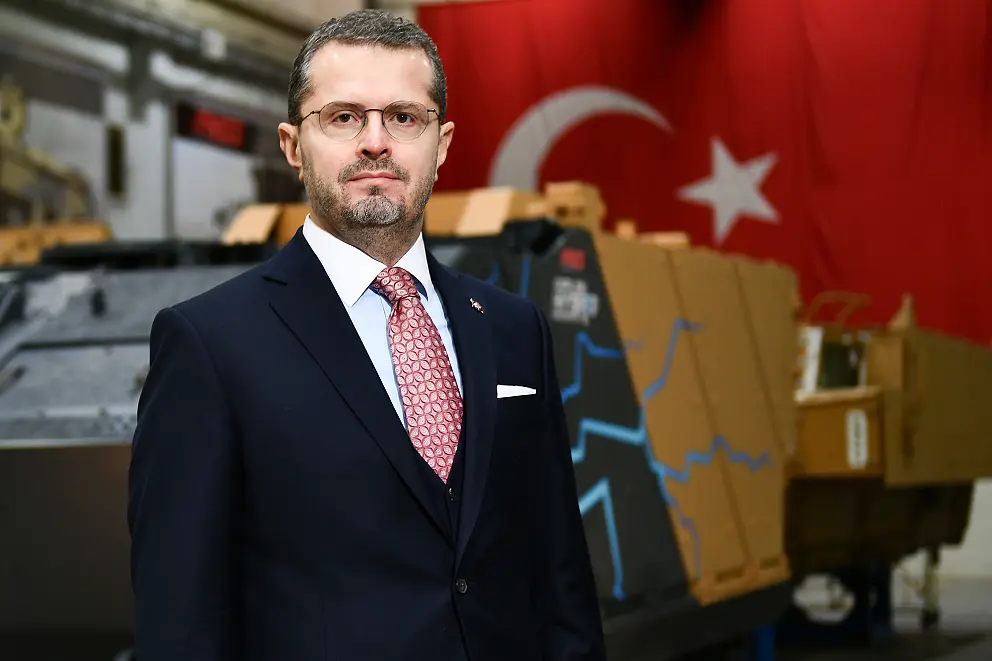
A Message from our General Manager Selim BAYBAŞ
As we close the third quarter of 2026, I am proud to share with you the tangible progress the FNSS family has achieved in our new-generation unmanned systems solutions, our international programs and our R&D journey.
One of the most important milestones of this period came at TEKNOFEST Mavi Vatan 2026, hosted by the Gölcük Naval Shipyard Command in Kocaeli from 20 to 23 August. There, among the young people who represent our country's future, we introduced U-MAV, our Multi-Purpose Modular Unmanned Amphibious Vehicle, and with it opened a new chapter for FNSS.
Amphibious assault is among the operations with the highest risk of casualties, and its first wave is the most critical phase of all. U-MAV was designed precisely to take personnel out of that phase. U-MAV will operate alongside the Turkish Naval Forces Command's Marine Assault Vehicles (MAV) in a manned-unmanned teaming (MUM-T) concept. It can be configured for ten different missions, from Fire Support and Mine Clearance to Electronic Warfare and Casualty Evacuation. Two further features set U-MAV apart: an AI-supported image processing architecture, and Nurol Teknoloji's "Armour Integrity" structural health monitoring system, which U-MAV is the first unmanned vehicle to integrate.
Very few companies worldwide can produce an unmanned amphibious ground vehicle of this size and capability. With more than 35 years of experience in the industry and an active production line, FNSS is one of a small number of NATO suppliers able to build different platforms concurrently. U-MAV brings together our engineering capabilities, the field-proven success of the MAV and our ongoing R&D efforts. It is a concrete reflection of our determination to grow our work and R&D investments in unmanned and autonomous vehicle technologies.
This quarter also brought recognition for our R&D investments: in Turkishtime's 2025 R&D 500 survey, FNSS ranked 19th among the 500 companies with the highest R&D expenditure and 9th in number of design registrations. We were also listed among the Top 100 Companies with the Highest International Sales of R&D Products over the last three years. Our top rankings across various R&D criteria are a strong indicator of the technology ecosystem we have built with the right vision. For us, the most valuable aspect is that these results reflect an FNSS that develops its own technology, invests in qualified human resources and takes the products it develops to different regions of the world.
Within the scope of our cooperation with friendly and allied nations, we also passed an important milestone in the HARIMAU Armoured Personnel Carrier (HARIMAU APC) Project we are carrying out together with PT Pindad. The pre-delivery acceptance tests of the first vehicle, produced at FNSS facilities to meet the Indonesian Army's requirement for a 30-ton class tracked armoured personnel carrier, were successfully completed in Türkiye with the participation of PT Pindad. Following the vehicle's shipment to Indonesia, final acceptance tests will be carried out together with the end user, while production activities for the second vehicle, to be manufactured at PT Pindad's facilities, are continuing concurrently. A continuation of the success achieved in the KAPLAN MT (HARIMAU Medium Tank) Project, this program once again demonstrates FNSS's experience in technology transfer and local production. FNSS's localization programs (covering local employment, domestic supply chains in user countries and technology transfer) deliver significant added value to our international users.
For FNSS, the third quarter of 2026 was a period of success on three fronts: we opened a new era in unmanned systems, strengthened our technology transfer and local production capabilities in international programs, and saw our R&D strength formally recognised. The steps we have taken with U-MAV and with the KAPLAN APC in Indonesia stand as the clearest evidence of our determination to grow both our current competitiveness and our capacity for the future.
I wholeheartedly congratulate the entire FNSS family who contributed to these achievements, and thank our business partners and the stakeholders who continue to place their trust in us. We will keep moving forward with the same enthusiasm to do even better.
Sincerely,
FIRST VEHICLE PRE-DELIVERY ACCEPTANCE TESTS SUCCESSFULLY COMPLETED IN THE KAPLAN APC PROGRAM DEVELOPED BY FNSS AND PT PINDAD
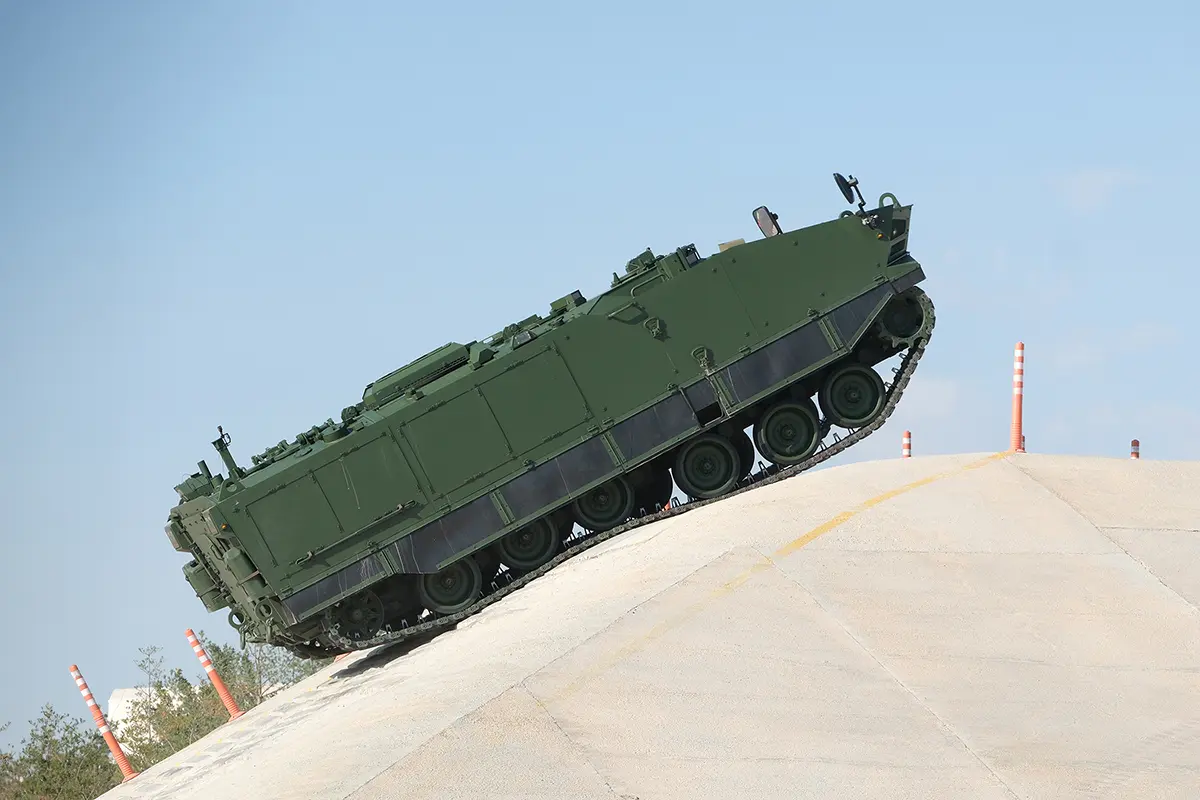
Following the contract signed between PT Pindad and the Indonesian Ministry of Defense to meet the Indonesian army's requirement for a 30-ton class tracked armoured personnel carrier, the first KAPLAN APC (HARIMAU APC) was manufactured at FNSS facilities under the "KAPLAN Armoured Personnel Carrier (KAPLAN APC) Development and Production Agreement" signed between PT Pindad and FNSS. The vehicle's pre-delivery acceptance tests were successfully carried out in Türkiye with the participation of PT Pindad.
Following the shipment of the HARIMAU APC to Indonesia, final acceptance tests will be carried out together with the end user. Production activities for the second vehicle, to be manufactured at PT Pindad's facilities in Indonesia, are also continuing at the same time.
The KAPLAN APC (HARIMAU APC) Project, a continuation of the success achieved in the KAPLAN MT (HARIMAU) Project, has once again demonstrated FNSS's experience and success in technology transfer and local production.
TURKISHTIME R&D 500
FNSS Savunma Sistemleri ranked 19th among the Top 500 Companies with the Highest R&D Expenditure in 2025, as announced by Turkishtime. The company also ranked:
- 34th in the Top 100 list by Number of Projects Conducted at R&D Centers in 2025,
- 29th in the Top 100 list by R&D Center Employment in 2025,
- 16th in the Top 50 list by Number of Master’s and PhD Personnel Employed at R&D Centers in 2025,
- 34th in the Top 50 list by Number of National Patents Obtained by R&D Centers in 2025,
- 9th in the Top 50 list by Number of Design Registrations Obtained by R&D Centers in 2025,
- 18th in the Top 50 list by Number of Utility Models Obtained by R&D Centers in 2025,
- 71st in the list of Top 100 Companies with the Highest International Sales of R&D Products in the Last 3 Years (2023–2025).
FNSS CEO and Board Member Selim Baybaş said: “As FNSS, it is a great source of pride to see the results of our investments in technology, innovation and our people. In Turkishtime’s 2025 R&D survey, we ranked 19th among Türkiye’s 500 largest companies in R&D expenditure and 9th in design registrations. In addition, our top rankings across various other R&D criteria are a strong indicator of the technology ecosystem we have built with the right vision. For us, the most valuable aspect is that these results reflect an FNSS that develops its own technology, invests in qualified human resources and takes the products it develops to different regions of the world. We wholeheartedly congratulate the entire FNSS family who contributed to this success. We will keep going with the same enthusiasm to do even better.”
THE FIRST WAVE OF AMPHIBIOUS ASSAULT IS NOW UNMANNED: FNSS UNVEILS U-MAV
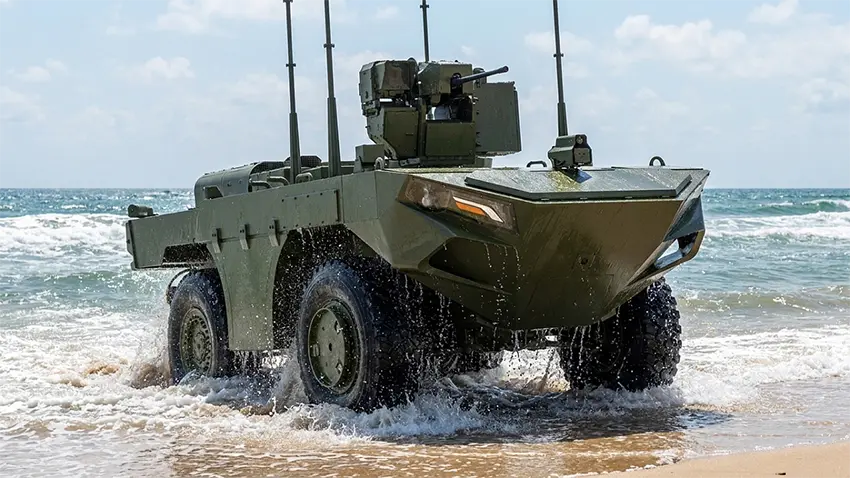
FNSS has unveiled the U-MAV Multi-Purpose Modular Unmanned Amphibious Vehicle at TEKNOFEST Mavi Vatan.
FNSS unveiled U-MAV, the Multi-Purpose Modular Unmanned Amphibious Vehicle at TEKNOFEST Mavi Vatan 2026, hosted by the Gölcük Naval Shipyard Command in Kocaeli from 20 to 23 August 2026. İ-ZAHA designed to take the crew out of the first wave which is the highest-risk phase of any amphibious assault and to operate as part of a manned-unmanned team (MUM-T) with the Marine Assault Vehicles (MAV) already in service with the Turkish Naval Forces Command. It makes first contact with the opposing force's shore defences ahead of the manned wave and keeps operators in a safe area. The 8-ton platform transits from sea to shore without interruption, reaching 7 knots ashore and 70 km/h on land. Its modules can be changed in the field in approximately 40 minutes allowing ten different mission variants, from Fire Support and Mine Clearance to Electronic Warfare (EW) and Casualty Evacuation (CASEVAC).
Speaking about U-MAV, FNSS CEO and Board Member Selim Baybaş said: "FNSS continues to grow its work and its R&D investment in unmanned and autonomous vehicle technologies. U-MAV brings together our engineering capability, the field success of the Marine Assault Vehicle (MAV) and our continuing R&D effort in a new-generation, heavy-class unmanned amphibious vehicle. Very few companies worldwide can build an unmanned amphibious vehicle of this size and capability. With more than 35 years of experience in the industry and an active production line able to build several different platforms concurrently, FNSS is one of a small number of NATO suppliers that can do so. I am proud to say that U-MAV opens a new era for FNSS.”
Multi-Purpose Modular Unmanned Amphibious Vehicle
Amphibious assault is among the most demanding and highest-casualty-risk operations in the full spectrum of warfare. The opposing force denies the beachline through layered minefields and fixed obstacle belts, while positioning machine gun and anti-tank guided missile (ATGM) emplacements to dominate the shore. Obstacle systems slow the assault force, channels it into kill zones, and increase the lethality of enemy fire. Every second the first assault wave is delayed favours the defender. This critical interval from the moment the assault force is within range to the moment it crosses the waterline is decisive for the entire operation; the opposing force uses this window to disrupt assault momentum and defeat the operation before the main attack can be pressed home.
Developed by FNSS, the U-MAV Multi-Purpose Modular Unmanned Amphibious Vehicle is a next-generation unmanned manoeuvre element, designed to operate in close coordination with Marine units equipped with the MAV/ZAHA amphibious assault vehicle. The primary mission of U-MAV is to
establish initial engagement with enemy coastal defences ahead of manned MAV/ZAHA elements, neutralise mines and obstacles in accordance with its configured payload, prepare the beach for manned MAV/ZAHA approach and landing, and provide support throughout all subsequent phases of the operation. Autonomous, remote-controlled, or hybrid control modes keeping operators away from the line of contact throughout the mission, while the modular payload architecture, configurable with a range of mission systems, ensures that U-MAV contributes not only at initial contact, but actively across all phases: assault, support seizure and securing of the beachhead.
MISSION-SPECIFIC CAPABILITIES
Modular Mission Architecture
One of U-MAV's most significant features is the interchangeability of mission payload modules on a common base platform, tailored to different operational profiles. The module swap can be completed in approximately 40 minutes in the field, enabling ten distinct mission configurations: Fire Support, Mine Clearance, Combat Engineering, Electronic Warfare (EW), Reconnaissance (RECCE), Deception, Counter-Drone, Navigation and Obstacle Marking, Logistics Support, and Casualty Evacuation (CASEVAC). Multiple variants can operate in a coordinated fashion within the same operation. The common platform and sustainment infrastructure shared across variants minimises the logistics footprint while maintaining a high state of operational readiness.
Maritime and Land Mobility
U-MAV delivers seamless sea-to-shore mobility with a swimming speed of 7 knots and a road speed of 70 km/h. A combined 300-horsepower (hp) powerpack provides robust and reliable propulsion at an amphibious combat weight of 8 tonnes. With a power-to-weight ratio of 37.5 hp/tonne, the platform sustains performance throughout the transition from the waterline to hard terrain. An independent suspension system provides high manoeuvrability, while selectable tyre options allow adaptation to various ground conditions. Low visual, thermal and acoustic signatures enhance the platform's stealth, while offering a generous payload volume for casualty evacuation, mission equipment and logistic support.
Remote Control and Inertial Navigation Capability
U-MAV is designed to operate in autonomous, remote-controlled, or hybrid mode. An encrypted mesh network infrastructure, GNSS/INS navigation system, and IFF identification module work in concert to maintain command and control (C2) continuity throughout the operation. The inertial navigation unit (INU) sustains position estimate in environments where satellite signals are denied or degraded. Communications range is 3 km in line-of-sight (LOS), extendable via UAV relay support across all variants. Operators remaining aboard ship throughout the mission reduces the risk of casualties to zero compared to traditional vanguard force elements. Upon datalink interruption, the platform first transitions to a safe hold state; it then either automatically returns to base via a pre-programmed route or continues the navigation task, depending on configuration.
Rapid and Effective Deployment Capability
U-MAV is fully transportable by road, rail, and sea across all standard military transport assets. Where rapid airlift to distant operational areas is required, the platform is compatible with heavy-lift helicopters and strategic airlifters including the CH-47F Chinook, Mil Mi-26, C-130 Hercules, A400M, C-17 Globemaster, C-5 Galaxy, An-124, and Il-76, making it highly compatible with modern joint logistics frameworks.
Artificial Intelligence (AI) Support
U-MAV's AI-enabled image processing architecture analyses camera feeds in real time on the vehicle's onboard mission computer, transmitting detection data rather than high-bandwidth video via radio link. This preserves low-latency target awareness in bandwidth-constrained and communications-degraded environments. Detected elements are tagged with threat scores, type, and status using colour-coded overlays and detailed intelligence cards. Automatic target detection and fire control systems accelerate the engagement cycle by presenting prioritised targets to the operator, reducing scanning burden; all detected targets are tracked and recorded with timestamps. A newly defined target type or engagement rule can be applied instantly to the live imagery feed in the field.
The First Unmanned Vehicle Integrated with ‘Armor Integrity’
U-MAV is the first unmanned vehicle to integrate Armor Integrity, Nurol Teknoloji's structural integrity monitoring system, into its digital backbone. With no crew to assess a hit, the system replaces human judgement. Its sensors detect an impact's location, direction and severity in real time, calculate the affected area's remaining structural capacity, track latent damage that accumulates over time, and transmit to the operator and chain of command. Using real-time data and systematic tactical analysis, it offers the commander options: manoeuvring to protect the weakened area, taking cover, continuing the mission or a passive role. If the connectivity is lost, data is stored locally and sent on reconnection, so the decision cycle from operator to tactical planning and logistics support is fed without interruption.
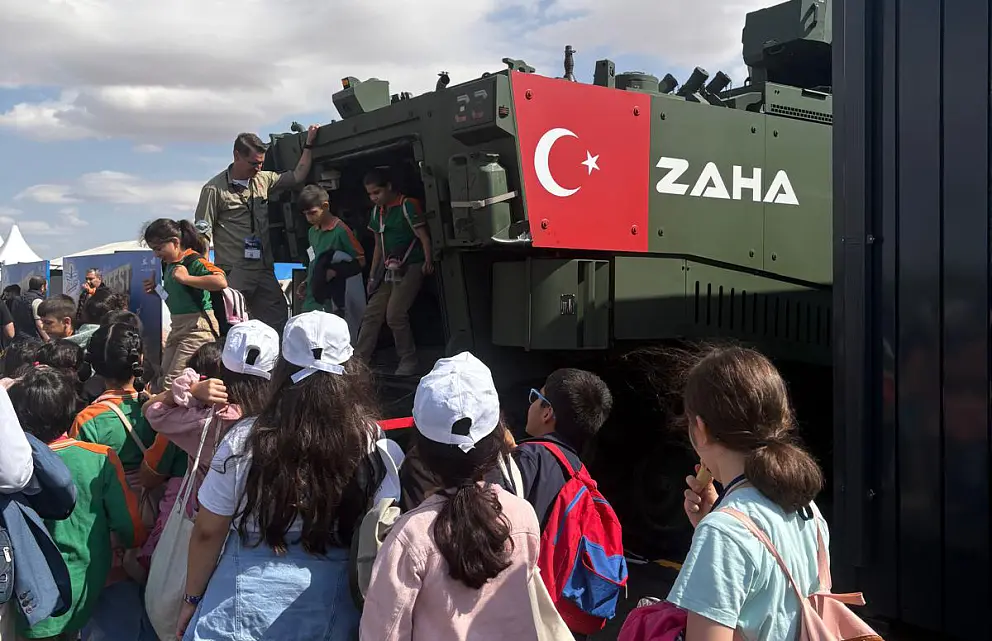
FNSS at TEKNOFEST Mavi Vatan and TEKNOFEST Güneydoğu
This year, FNSS came together with youth at two TEKNOFEST events. At TEKNOFEST Mavi Vatan, held at the Gölcük Shipyard Command on 20-23 August, we introduced U-MAV Multi-Purpose Modular Unmanned Amphibious Vehicle. Developed to take the human crew out of the highest-risk phase of amphibious assault operations, U-MAV was exhibited for the first time at the festival, where maritime and defence technologies came together.
At TEKNOFEST Güneydoğu, held at Şanlıurfa GAP Airport from 30 September to 4 October, FNSS showcased the Marine Assault Vehicle MAV (ZAHA) to visitors. The festival welcomed more than 1.3 million visitors over five days and saw strong participation from schools across the region, giving us the opportunity to meet with the young people who visited our stand.
As FNSS, we were delighted to meet the young generation who will drive the technology forward, and proud to inspire them.
Türkiye's FNSS, at the Heart of Transformation
Kerem Kaplan — Programs and Business Development Director, Domestic Markets
2026 will go down as a landmark year for FNSS. We completed the Phase I acceptances of the Special Purpose Vehicles (SPV) Project and signed the Phase II contracts for the Marine Assault Vehicle (MAV) and SPV projects. Across our other programs, deliveries continued at pace, with many vehicles handed over ahead of schedule. In line with our country's needs, we attached particular importance to air defence projects: while continuing deliveries of air defence platforms, we also signed new contracts.
These hard-won results reflect not only our program performance, but also the transformation we have set in motion.
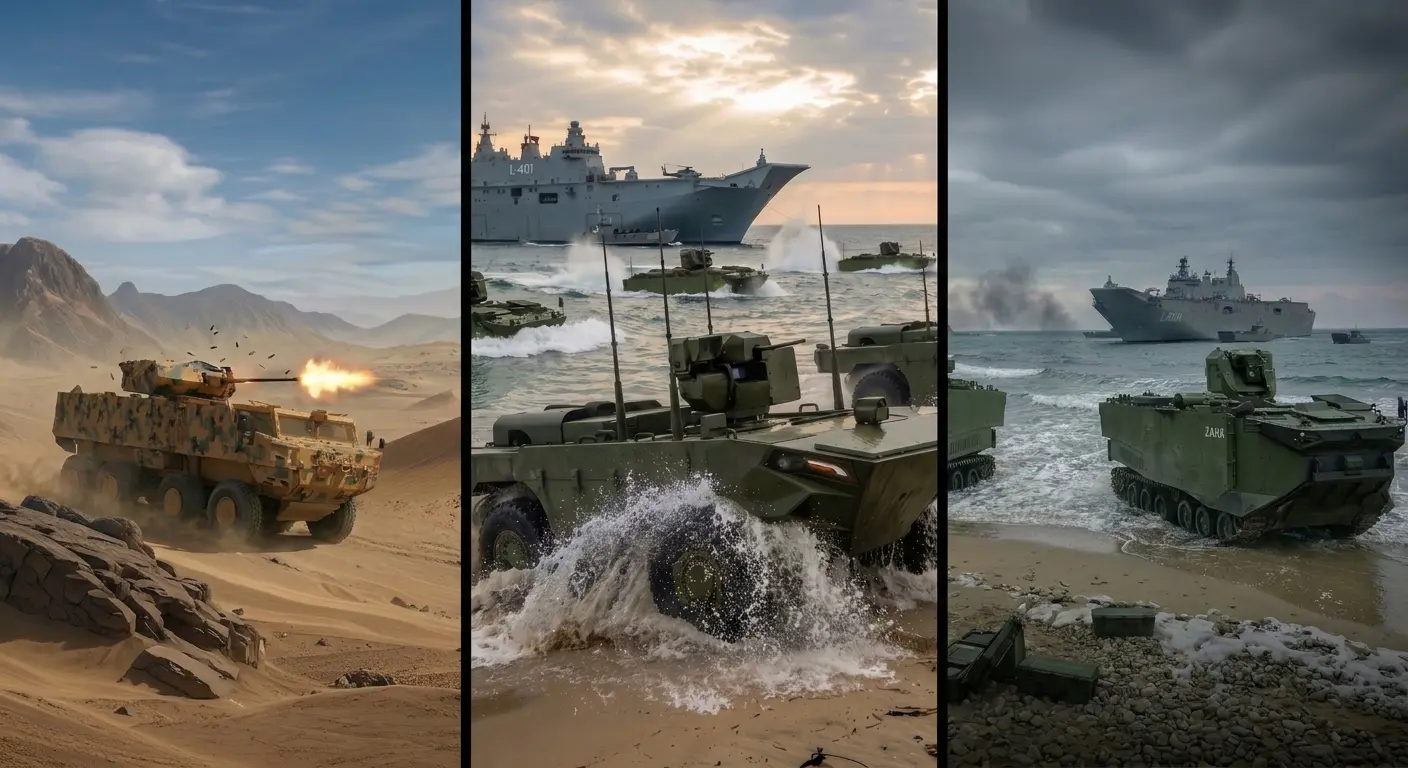
Speed is one of the defining criteria of this transformation, and today's security environment is the main reason why. In recent years, the number of interstate armed conflicts has reached its highest level since 1946, and global military expenditure has risen for the eleventh consecutive year. Türkiye sits right at the centre of the region where these conflicts have intensified. The conflicts around us offer the most striking lesson of this new era: an army's strength is now measured not only by the number of systems in its inventory, but also by how quickly it can replace them. In other words, deterrence now depends on industrial production tempo as much as on inventory.
At the same time, technological advances and new threats are emerging at an ever-increasing pace. No army can any longer afford to wait ten years for a requirement to be met. A requirement becomes urgent the moment it emerges. Predicting how the battlefield will take shape ten years from now, and what will be needed in the field, is far harder than it used to be.
This picture places a historic responsibility not only on FNSS but on the entire Turkish defence industry. Delivering the systems our heroic Armed Forces need to the field as quickly as possible is our foremost duty.
With this awareness, we have launched a comprehensive transformation at FNSS. Under our Strategic Production Network Model, every square metre of FNSS is now dedicated to high value-added work, while significant additional investment has nearly doubled our vehicle delivery capacity. In doing so, our aim has been to meet the needs of the Turkish Armed Forces faster, while minimising potential uncertainties in the supply ecosystem and offering a far more cost-effective solution.
At the core of this transformation lies a constant appetite for doing better. We approach everything we do, and every process we run, with one question: "How can we do this better?" We are streamlining our processes, eliminating every step that does not add value, and seeking ways to deliver a higher-quality product at a more competitive cost. We see excellence not as a destination, but as a working discipline to be earned anew every day.
We are reshaping our supply network with the same mindset. We are moving away from contract-by-contract relationships toward a long-term strategic model built on mutual trust: one that is highly predictable and drives efficiency both at FNSS and across our stakeholders.
Of course, the change in FNSS's approach does not end there. Our product development and innovation processes have also been reshaped. We have redesigned our organisation so that innovation no longer gets lost in day-to-day priorities: new ideas and designs are now developed in a dedicated, independent structure, separate from the daily workflow. One outcome of this is U-MAV, which we launched at TEKNOFEST Mavi Vatan on 20 August 2026. By stepping outside the industry's standard development processes, we took U-MAV, a first in its class, from concept to unveiling in a very short time. The response we received confirmed that we were on exactly the right track. Delivering U-MAV to the end user as soon as possible will be our next goal.
In the period ahead, we will see the effects of this change in concrete terms. The transformation in the way we work will be reflected in our speed and quality, carrying our company much further. "Türkiye's FNSS" will stride into the future with far greater confidence.